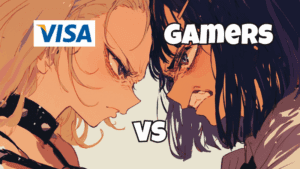
Steam Removing Adult Games: How Payment Processors & Lobby Groups Are Censoring Us

Steam Removing Adult Games. For real.
Have you noticed hundreds of adult games missing from Steam? Yeah, that happened. Not because they were illegal or harmful, but because three companies—Visa, Mastercard, and PayPal—decided what we degenerates and cultured gentlemen could or couldn't buy.
Quick Facts:
- In July 2025, the gaming landscape faced a significant upheaval as platforms like Steam and Itch.io implemented drastic measures to curb adult and NSFW content due to pressure from payment processors such as Visa, Mastercard, and PayPal.
- Steam introduced a new guideline prohibiting content that violates the “rules and standards” of these processors, leading to the removal of hundreds of adult games tagged with adult themes.
- Itch.io, a haven for indie developers, took an even more extreme step by deindexing all NSFW content from its browse and search pages, rendering thousands of games—some unrelated to explicit content—unsearchable.
Why The Hell Did This Happen? Lobbies, baby!
The catalyst for all this has been a campaign from the Australian anti-porn group Collective Shout, which targeted a controversial game called No Mercy hosted on both platforms before its removal in April 2025.
Collective Shout is an Australian feminist/anti-porn lobby group that’s been on a moral crusade for over a decade, pushing censorship under the guise of protecting women. (Because hentai waifus apparently are real women? I don't even know anymore).
They've targeted everything from GTA V to indie porn games. The sad thing is that their tactics work: they use outrage, petitions, and corporate pressure to get games pulled and enforce stricter content policies always according to their own morals.

Why Payment Processors Strike
You might wonder: Why the hell do Visa and Mastercard care about what games we play? Why do they listen to these crazy, extremist lobby groups?
The answer is a toxic cocktail of legal paranoia and financial risk.
Reason Number 1: Payment processors live in constant fear of lawsuits. Laws like SESTA/FOSTA (2018) and the UK's Online Safety Law hold platforms and processors liable for hosting illegal content. One bad headline about “facilitating CSAM” could cost billions in lawsuits. (Not that these games were illegal, but we'll talk about that later).
Reason Numer 2: Processors fear for their brand reputation. As publicly traded companies, Visa, Mastercard, and PayPal prioritize shareholder value and brand image. When advocacy groups like Collective Shout launch campaigns, executives panic. The group's July 11, 2025 open letter to payment processor CEOs, supported by 1,047 emails, accused them of profiting from “rape, incest, and child abuse games.”
So they adopt the nuclear approach: Better safe than sorry.
What Can Be Done? The OnlyFans Case
Remember 2021? OnlyFans faced the exact same pressure.
OnlyFans announced it would prohibit sexually explicit content starting October 1, 2021, due to demands from banking and payment processing partners. The internet exploded.
But here's what happened next: Within six days, OnlyFans reversed the decision. The platform secured assurances from payment processors after negotiations, leveraging its massive transaction volume.
How Did They Do It?
- Massive Revenue Leverage: Billions in annual transactions gave OnlyFans negotiating power
- Public Backlash: Creator outcry on social media pressured the platform
- Processor Diversification: They found alternatives like CC Bill and Verotel
- Enhanced Moderation: Stricter content verification appeased processor concerns
The result? OnlyFans kept its adult content and thrived.
Where Valve and Itch.io Failed (And What They Could Still Do)
Unlike OnlyFans, Steam and Itch.io chose the path of least resistance. Valve's statement to PC Gamer essentially said: “We can't risk losing payment methods.”
But they have options:
- Alternative Payment Processors: Platforms like Second Life use processors like Thunes. DLsite proved it works—more on that bombshell later.
- Market Power Play: Steam's $5 billion annual revenue isn't pocket change. Valve could negotiate, as OnlyFans did, by highlighting the financial loss processors would suffer.
- Enhanced Content Moderation: Steam already has opt-in systems for 18+ content. Better tagging and verification could satisfy processor demands without mass deletions.
Community Mobilization & The Voice of the People – What Gamers Really Think
The user sentiment is crystal clear—and it's not pretty for payment processors.
Many people are outraged and deeply concerned about the growing influence of payment processors like Visa and Mastercard in shaping what content platforms allow. There's a strong sense that this isn't just about adult games—it's about creeping censorship that could soon affect… well, anything.
Moral panic campaigns are being weaponized to control digital expression. And that's WRONG!
The community demands action: Steam Wallet integration, cryptocurrency adoption, legislative support for the Fair Access to Banking Act. But skepticism runs deep—Valve's adult game revenue is minimal compared to their massive catalog.
The Economic Reality: David vs. Three Goliaths
Here's the brutal truth: Visa and Mastercard control 90% of global transactions outside China. Steam's $5 billion revenue is a “rounding error” compared to Visa's $15 trillion in annual transactions.
For Itch.io, the math is even starker. As a smaller platform relying on indie creators, losing processor support could mean platform death.
Adult games, while popular among us cultured individuals, contribute minimally to Steam's bottom line. Individual titles reportedly generate $10k-$20k—chump change for a platform making billions.
For them, it's easier to sacrifice niche content than risk the entire payment infrastructure.
Champions of Freedom: The Resistance Rises!
Not everything is lost, though. Many voices—including influential ones—are rising up against these awful practices. Here are some of them:
Elon Musk's Intervention
On July 23, 2025, Musk responded to an X post about Visa's censorship in Japan, hinting at developing a censorship-free payment system. While no concrete plans emerged, his interest signals potential disruption to processor monopolies.
Japan's Political Pushback
Taro Yamada, Japanese politician and former mangaka, became an unlikely hero. Yamada criticized Visa's actions as a threat to creative freedom, with Japan's Financial Services Agency investigating processor overreach.
Yoko Taro, director of Nier: Automata, warned that payment processor censorship endangers democracy by controlling content distribution. He said: “Controlling payment processing companies can censor another country's free speech”. And he's absolutely right. Why should a lobby group in Australia control what Japan does?
DLsite's Middle Finger to Corporate Censorship
When Visa and Mastercard pressured Japanese platform DLsite over adult manga and doujinshi, DLsite did something extraordinary—they told them to fuck off.
The platform removed Visa and Mastercard as payment options entirely, relying on JCB and direct bank transfers. Sure, it limited international accessibility, but DLsite preserved its content and principles. (And by the way, you can still buy using a Proxy Buying service, see our article here for more details).
The message was clear: We'd rather sacrifice revenue than bow to corporate censorship. Kudos to them!
The Slippery Slope: Where Does This End?
If Visa, Mastercard, and PayPal can dictate what legal games Steam sells, what stops them from targeting other content? Books with political themes? Films with religious commentary? Art that offends lobby groups?
Collective Shout's history proves this isn't hypothetical. They've attacked mainstream titles, and users fear expanded censorship.
Payment processors should facilitate transactions, not act as moral gatekeepers. Legal content—whether adult games, spicy comics, or controversial subscriptions—should be governed by laws, not corporate whims.
The Market Always Finds a Way (But We Must Fight)
Despite the current crisis, hope remains.
Alternative platforms exist: Nutaku specializes in adult games. Cryptocurrency offers decentralized payments. Alternative processors like Thunes and JCB provide options for platforms brave enough to use them.
DLsite proved resistance works. OnlyFans showed negotiation succeeds. The tools exist—platforms just need the courage to use them.
As for us consumers, we cannot remain silent. This affects every gamer, creator, and consumer who values freedom of choice.
Here's what we can do:
- Support resistant platforms like DLsite and Nutaku
- Advocate for legislation like the US Fair Access to Banking Act
- Contact representatives about payment processor overreach
- Use alternative payment methods when available
- Share stories about censorship's impact on creators
Conclusion: The Battle for Digital Freedom
Steam removing adult games isn't just an inconvinience. This is about who controls what we can consume. It's about lobby groups and payment procesors censoring creators and consumers. When three companies can dictate platform policies worldwide, we're not living in a free market—we're subject to corporate authoritarianism.
Today it's adult games. Tomorrow it could be books, films, or any content that offends the wrong lobby group. We've seen this playbook before, and it never ends.
The choice is ours: Accept corporate censorship or fight for our right to consume legal content. The market will find alternatives—but we shouldn't have to work around censorship in the first place.
As cultured gentlemen and degenerates, we've always found ways to access the content we love. But this time, the stakes are higher. This time, it's about the fundamental right to choose what we buy, read, and play.
The corporations may control the payments, but they don't control our voices. It's time to use them.